
PRIM Zambia Supports MoH in Conducting the 2026 Digital Health Maturity Assessment
Updated: May 5
Three-day stakeholder workshop generates evidence to shape Zambia's next national digital health strategy
By PRIM Zambia Communications Team.
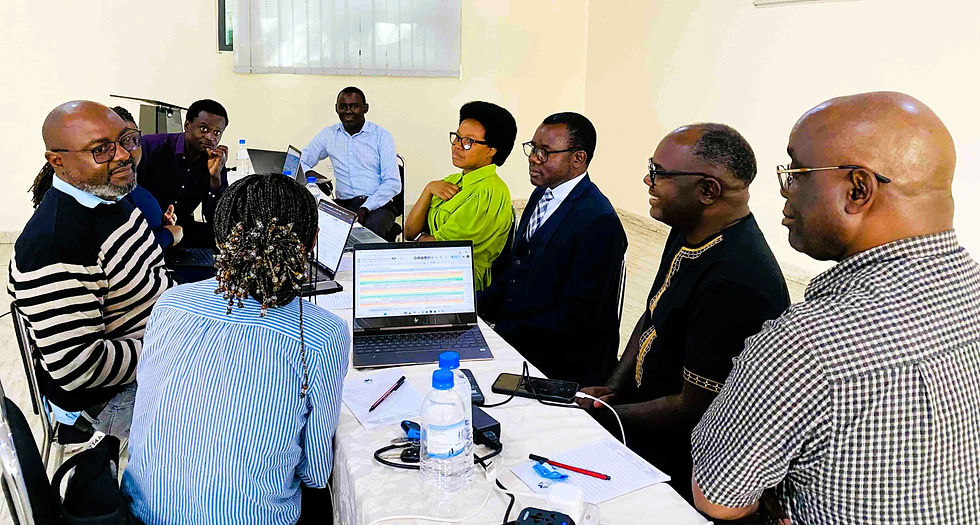
Lusaka, Zambia — Participatory Research and Innovations Management (PRIM) Zambia, in partnership with the Ministry of Health (MoH) ICT Directorate, successfully facilitated the 2026 Digital Health Maturity Assessment—a comprehensive three-day workshop that convened national health leaders, digital health specialists, and technical partners to evaluate Zambia's digital health ecosystem and establish priorities for the next national strategy.
With Zambia's current National Digital Health Strategy concluding in 2026, this annual assessment serves as both a diagnostic tool and strategic planning instrument. The findings will directly inform the priority areas, investment pathways, and governance frameworks of the forthcoming national strategy, ensuring that digital health continues to advance progress toward Universal Health Coverage.
Strategic Context: Why This Assessment Matters:
Speaking when she delivered her opening remarks, Ms. Mirriam Musama, Assistant Director of ICT at the Ministry of Health, emphasized the timeliness of the exercise. "As our current National Digital Health Strategy reaches its conclusion, the results of this evaluation will be instrumental in shaping the priority areas and investment pathways of our next national strategy," she stated.

Ms. Musama underscored that digital health maturity extends beyond technical benchmarking—it is a foundational enabler of Universal Health Coverage. She expressed appreciation to PRIM Zambia for sustained partnership and urged participants to ground their deliberations in practical, sector-wide experience to ensure the assessment yields actionable insights.
Professor Joseph Zulu, Technical Advisor for Research at PRIM Zambia and workshop co-facilitator, reinforced the organization's commitment to evidence-led digital transformation.
"Since establishing operations in Zambia in 2012, PRIM Zambia has remained steadfast in generating actionable evidence to strengthen health systems,"
Prof. Zulu observed. "Our strategic expansion into the digital health services space reflects our commitment to supporting Zambia's journey toward integrated, scalable, and people-centred health technologies." He highlighted PRIM Zambia's recent case study, Understanding the Digital Health Maturity in Zambia, funded by the Children's Investment Fund Foundation (CIFF) through the Global Initiative on Digital Health (GIDH), as evidence of the organization's deepening engagement with digital health governance and systems strengthening.
Workshop Objectives and Approach:
The workshop was designed to achieve four core objectives: orient stakeholders on the study's purpose and global context; review assessment domains to ensure common understanding; discuss evidence to assess strengths and gaps by domain; and establish consensus on current maturity levels with documented rationale.
Facilitators emphasized that the assessment is a structured, evidence-informed process to understand digital health ecosystem maturity across agreed domains—moving systematically from current state analysis to identifying gaps, defining priority actions, and establishing a scale pathway. Importantly, it is not an audit or fault-finding exercise, but rather a joint reflection designed to strengthen coordination, investment, implementation, and learning among all stakeholders.
The immediate output: agreed maturity levels, supporting rationale, key gaps, and priority strengthening actions to guide national planning.
The Assessment Framework: Seven Domains, Twenty-Three Indicators:
Mr. Innocent Chiboma, Principal ICT Officer for Digital Health at the MoH and workshop co-facilitator, guided participants through the assessment methodology. The framework evaluates progress across seven globally recognized domains:
Leadership and Governance
Examines institutional arrangements, strategic alignment with national health priorities, equity considerations, and gender integration in digital health policy.
Strategy and Investment
Assesses the existence of costed digital health plans, alignment with Universal Health Coverage, and sufficiency of public and private sector financing.
Legislation, Policy, and Compliance
Addresses data security laws, privacy protections, protocols for connected medical devices, artificial intelligence governance, and cross-border data exchange frameworks.
Workforce
Evaluates integration of digital health into pre-service and in-service curricula, availability of specialized training programmes, and defined career pathways for digital health professionals.
Standards and Interoperability
Examines national architectural frameworks and standards for data exchange, security, and hardware compatibility.
Infrastructure
Reviews national network readiness and plans for equitable expansion of digital health infrastructure to all public facilities.
Services and Applications
Assesses the scale of nationally deployed digital systems, availability of unique registries for providers, facilities, and patients, and integration of digital tools into public health reporting and decision-making.
This framework aligns with World Health Organization (WHO) guidance and regional benchmarking tools, enabling systematic tracking of progress. Over the past decade, Zambia has progressively digitized health records, expanded eHealth training, and piloted integrated health information platforms—making this assessment a timely milestone for consolidating gains and informing future-ready policy design.
Multi-Sectoral Participation:

The workshop brought together approximately twenty participants representing the full spectrum of Zambia's digital health ecosystem. Leadership from the Ministry of Health ICT Directorate included the Director of ICT, the Assistant Director of ICT, Principal ICT Officers for Digital Health, Infrastructure, and Applications, alongside specialists in cyber security, health information systems, and biostatistics. Clinical perspective was provided by medical doctors from the University Teaching Hospitals (UTH) and MoH HQ.
PRIM Zambia's technical team included research leadership, digital health specialists, and monitoring and evaluation experts who actively participated during the assessment process. Development partners and technical organizations contributing to the dialogue included representatives from the Zambia Health Informatics Association (ZHIA), SolidarMed, the Clinton Health Access Initiative (CHAI), the Centre for Infectious Disease Research in Zambia (CIDRZ), and Systems for Development (S4D).
This diverse composition of participants ensured that the assessment captured perspectives from national policy leadership, technical implementation, clinical service delivery, academic training institutions, and development partners—creating a comprehensive view of Zambia's digital health maturity.
Collaborative Methodology: From Discussion to Consensus:
The assessment employed a participatory, consensus-building approach. Participants were divided into working groups to discuss and score each of the twenty-three indicators across the seven domains. Groups examined available evidence, shared institutional knowledge, and debated ratings based on documented progress and identified gaps.
Following group deliberations, scores were presented in plenary sessions where participants engaged in validation discussions, challenged assumptions, and worked toward consensus. This iterative process ensured that ratings reflected collective expertise rather than individual perspectives. Preliminary scores were shared with participants for review; final validated scores, upon approval and publication, will be submitted to the Global Digital Health Monitor for regional and global benchmarking.
Preliminary Findings: Strengths and Persistent Gaps:
At the workshop's conclusion, participants were presented with early findings from the ongoing CIFF/GIDH-funded Digital Health Maturity Study, drawing on Fifty quantitative and Ten qualitative interviews with stakeholders at national, provincial, district, and facility levels. The data reveals a mixed landscape: stronger foundations in governance and infrastructure, but persistent challenges in workforce capacity and consistent application of global standards.
Deepening Insights: Governance, Financing, and Partnership Dynamics:
Following the formal assessment, the PRIM Zambia team convened a focused group discussion to gather additional qualitative insights for the ongoing study on Understanding the Digital Health Maturity in Zambia. Experts reflected on five thematic areas critical to digital health system strengthening.

On digital health budgeting, participants examined the structure of MoH budget allocations, specific budget lines for digital health, and how investments through cross-government initiatives like Smart Zambia interface with health sector financing. Regarding WHO guidance and technical support, the discussion explored how WHO frameworks have shaped national prioritization and maturity, with participants asked to provide concrete examples and data demonstrating impact.
The role of other stakeholders was examined to understand how partners complement or amplify WHO's contributions, with specific intervention examples requested. Participants also reflected on intangible contributions of WHO—policy influence, stakeholder coordination, trust-building—and how these have evolved over the past three to five years. Finally, the group identified future investment and coordination needs, prioritizing areas requiring strengthened collaboration between MoH and partners.
These qualitative insights will enrich PRIM Zambia's analytical work and support evidence-based advocacy for more coherent, sustainable digital health financing and governance arrangements.
Closing and Forward Look:

In closing remarks, Ministry of Health leadership expressed appreciation to PRIM Zambia for facilitating the workshop and urged for continued technical support for future digital health initiatives. Emphasis was placed on the importance of timely dissemination of study findings to all stakeholders upon finalization of the report to ensure broad ownership and utilization of results.
Responding on behalf of PRIM Zambia, Professor Zulu stated: "We sincerely appreciate Mr. Innocent Chiboma [Principal ICT Officer for Digital Health] and the entire team at the Ministry of Health, along with our digital health partners, for your dedication and hard work over the past three days. We will review the outputs [of the digital health maturity assessment] and reach out should we require any clarification. Special thanks to the Director ICT [Mr. Andrew Kashoka] and the Permanent Secretary [for Technical Services, Dr. Kennedy Lishimpi] for facilitating this process."
Next Steps:
The workshop marks the beginning of an intensive consolidation and validation phase. Final assessment scores will undergo review before publication on the Global Digital Health Monitor, enabling Zambia to benchmark progress regionally and globally. With permissison from CIFF, the Understanding the Digital Health Maturity in Zambia study report will upon completion be disseminated to all stakeholders, providing detailed analysis and recommendations.
Critically, assessment findings will be integrated into the development process for Zambia's next National Digital Health Strategy, ensuring that priorities are evidence-based and aligned with identified gaps and opportunities. PRIM Zambia and the Ministry of Health will continue the technical collaboration to strengthen digital health governance, financing mechanisms, and implementation capacity.
PRIM Zambia remains committed to generating actionable evidence that supports Zambia's journey toward an equitable, resilient, and people-centred digital health ecosystem. Stay tuned to our website for more updates on digital health and other initiatives.
About PRIM Zambia:
Participatory Research and Innovations Management (PRIM) Zambia is a research and implementation organization dedicated to generating credible, evidence-based insights that strengthen programme design, optimize intervention management, and inform policy direction—particularly for marginalised, excluded, and underserved communities.
Guided by a participatory, action-oriented, and gender-sensitive approach, PRIM-Zambia conducts implementation research across key sectors including health, education, child protection, women and youth empowerment, rural and community development, disability, and social inclusion. By bridging evidence with practice, the organization drives innovative solutions, strengthens institutional systems, and advances inclusive development that enhances community well-being and long-term resilience across Zambia.
Comments